Matte vs Gloss: Which Finish Is Best for Kitchen Tiles?
When choosing kitchen tiles, most people naturally start with colour, size and pattern. But there is another decision that can make just as much difference to the finished room: the tile finish.
The choice between matte and gloss can change how your kitchen looks, how much light it reflects and even how often you notice everyday marks on the surface. It is one of those decisions that can seem purely cosmetic when you are looking at individual samples, but becomes much more noticeable once the tiles cover an entire wall or floor.
If you are currently comparing different options, you can browse the Kitchen Floor and Wall Tiles to see how different finishes, colours and tile styles work together.
So, is matte or gloss better for a kitchen?
The honest answer is that neither finish is automatically better. The right choice depends on where the tiles are going, the amount of natural light in your kitchen, how busy the room is and the type of look you want to create.
What is the difference between matte and gloss tiles?
The simplest difference is how much light the surface reflects.
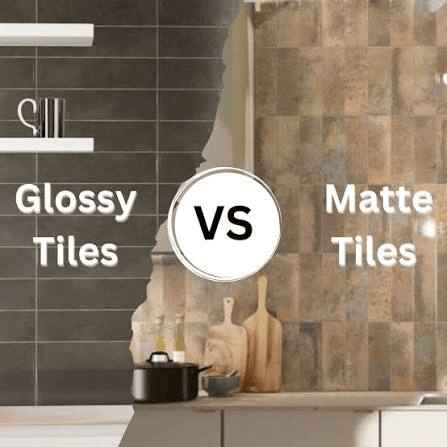
Matte tiles have a softer, low-reflective surface. Rather than bouncing light around the room, they tend to absorb more of it, giving the tile a quieter and more understated appearance.
Gloss tiles, on the other hand, have a smooth, reflective surface that catches light. This can make colors appear brighter and can give walls a cleaner, more polished appearance.
Neither finish changes the basic purpose of a suitable porcelain or ceramic tile. The finish is primarily about the appearance and surface characteristics, so it is worth considering alongside the tile's material, intended use, slip rating and maintenance requirements.
That last point is particularly important if you are choosing tiles for both walls and floors. A finish that looks excellent on a splashback is not necessarily the best choice for a kitchen floor.
Matte kitchen tiles: a softer, more relaxed look
Matte tiles have become increasingly popular in kitchens where homeowners want a contemporary but less polished appearance.
Because they do not reflect as much light, they tend to create a more natural-looking surface. This works particularly well with stone-effect, concrete-effect and neutral tiles, where the intention is often to create a calm and understated backdrop.
There is also a practical advantage that we often see when customers are choosing between samples.
Matte surfaces tend to be more forgiving of everyday marks.
Small smudges, light scratches and water marks generally don't catch the light in the same way they can on a highly reflective surface. That can be useful in a busy family kitchen where the tiles are not going to receive careful attention every time somebody cooks.
Imagine a kitchen where breakfast is rushed, children are making snacks and dinner is being prepared in the evening. You may not notice every small mark on a matte tile immediately.
That doesn't mean matte tiles are impossible to mark or that they never need cleaning. They still need regular maintenance. It simply means that the visual appearance can be a little more forgiving.
When does matte work particularly well?
Matte kitchen tiles are a good option if you want:
- A contemporary, understated appearance
- A more natural or stone-inspired finish
- Less obvious reflection
- A surface that is more forgiving of everyday smudges
- A softer look alongside wooden cabinetry
- A modern finish without making the kitchen feel overly glossy
They can also work beautifully when the rest of the kitchen already has plenty of visual interest.
For example, if you have timber-effect cabinets, a stone worktop and brass or black hardware, a simple matte tile can provide a quieter background rather than competing with the other materials.
Gloss kitchen tiles: brighter and more reflective
Gloss tiles create almost the opposite effect.
Their reflective surface catches both natural and artificial light, which can make a kitchen feel brighter. This can be especially useful in smaller kitchens or rooms where daylight is limited.
This is one reason glossy white kitchen tiles have remained a popular choice for many years. A white glossy tile doesn't just introduce a light color; its reflective surface can help distribute available light across the room.
This can make a noticeable difference when used as a kitchen splashback.
Gloss can also give a more traditional or elegant appearance depending on the tile itself. A simple metro tile in a glossy finish, for example, can create a very different atmosphere from the same shape in matte.
When does gloss work particularly well?
Consider gloss tiles if you want:
- A brighter-looking kitchen
- More reflection from natural or artificial light
- A clean and polished appearance
- A classic kitchen wall or splashback
- A way of making a smaller space feel more open
- Stronger color and visual impact
One thing to remember, though, is that reflection can work both ways.
A glossy surface can make a room look brighter, but it can also make fingerprints, splashes and water marks more noticeable. In a kitchen, particularly around the hob and sink, you may find yourself wiping the surface more frequently simply because marks are easier to see.
Matte vs gloss: which is easier to clean?
This is where the answer is slightly more complicated than simply saying one is easier.
Gloss tiles have a very smooth surface, which means they can generally be wiped down easily. Grease splashes or cooking residue can be removed from a smooth glazed surface with the appropriate cleaner and cloth.
However, because the surface is reflective, the marks themselves can be more visible.
Matte tiles can be very practical because everyday water marks and fingerprints are often less noticeable. However, some heavily textured or structured matte surfaces can take a little more effort to clean because dirt can settle into the texture.
So when customers ask which finish is easiest to maintain, I would look at the actual surface texture rather than simply choosing matte or gloss.
A smooth matte tile and a heavily textured matte tile can behave very differently.
What about scratches and imperfections?
This is another area where matte can have an advantage visually.
Because glossy surfaces reflect light, small scratches or surface imperfections can sometimes become more apparent when light hits them at an angle.
A matte surface doesn't have the same level of reflection, so minor imperfections can be less noticeable.
That does not mean matte tiles cannot scratch. The durability of the tile depends on factors such as the material, quality and intended application. The finish alone should never be treated as a guarantee of scratch resistance.
For a kitchen floor, make sure the particular tile is rated and suitable for floor use rather than choosing based only on whether you prefer the matte appearance.
Which finish is better for a kitchen splashback?
For kitchen walls and splashbacks, both can work extremely well.
A glossy splashback is particularly useful when you want to make the most of available light. It can also provide a crisp contrast against matt cabinetry or a darker worktop.
Matte, meanwhile, works well when you want the backsplash to blend more naturally with the rest of the kitchen.
Think about the overall balance.
If your kitchen already has shiny cabinets, polished worktops and metallic appliances, adding another highly reflective surface may make the room feel visually busy.
A matte tile could soften the overall appearance.
On the other hand, if your kitchen has dark cabinetry and limited natural light, a lighter glossy tile could introduce some welcome brightness.
This is why choosing tiles from a sample is so useful. A finish can look completely different under showroom lighting compared with the natural light in your own kitchen.
Should kitchen floor tiles be matte or gloss?
For kitchen floors, the decision requires more care.
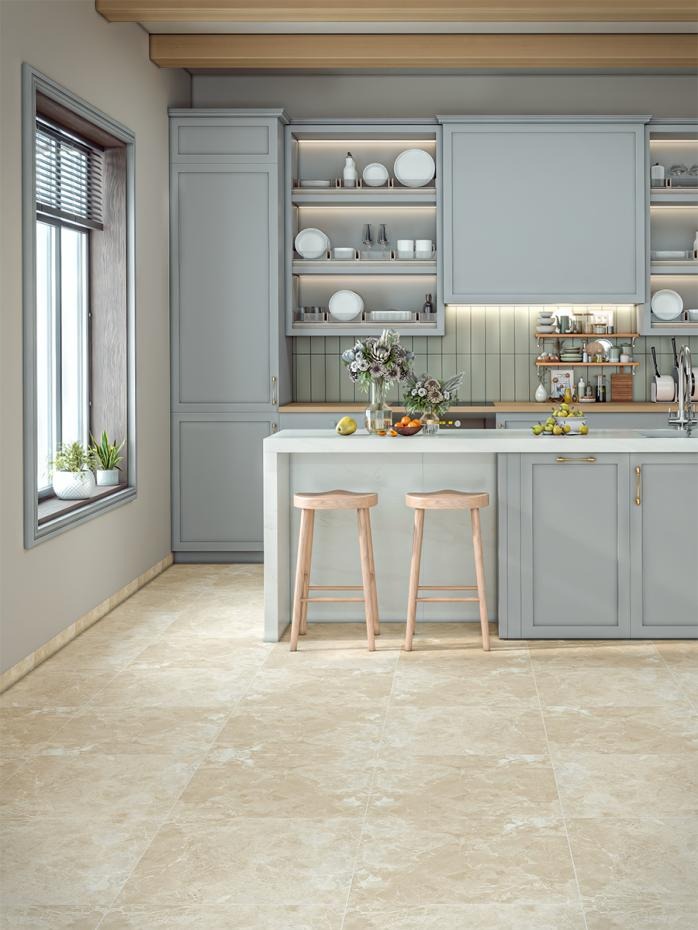
A glossy floor can look impressive, particularly in a large open-plan kitchen, but you need to consider practical factors such as slip resistance, surface texture and the manufacturer's suitability rating.
For most everyday kitchens, a practical matte or low-sheen floor surface is often the more sensible direction.
Think about what actually happens on your kitchen floor.
There may be water around the sink, cooking oil near the hob, muddy footprints coming through from outside and the occasional dropped drink. You want a floor that is designed for the environment rather than one chosen purely because it looks attractive in a photograph.
This is also why floor and wall tile specifications should never be confused. A tile being suitable for a kitchen wall does not automatically make it suitable for a kitchen floor.
What works best in a small kitchen?
If your kitchen is compact, gloss can be a clever design choice.
Reflective surfaces help bounce light around the room, and this can make a small kitchen feel brighter and more open.
A light-colored glossy wall tile can be particularly effective when combined with good lighting and pale cabinetry.
However, you don't have to use gloss everywhere.
One approach is to use a matte floor with a glossy wall tile. This gives you some variation in surface finish while keeping the walls bright and the floor visually softer.
That combination can be particularly effective in smaller kitchens because you get the practical character of a floor tile alongside the light-reflecting qualities of the wall finish.
Can you mix matte and gloss tiles?
Absolutely — and sometimes this is the most interesting option.
There is no rule saying that every tiled surface in a kitchen needs to have exactly the same finish.
For example, you could use:
Matte floor + gloss splashback
This is a practical combination that creates a subtle contrast between horizontal and vertical surfaces.
Or:
Gloss wall tiles + matte feature tiles
This can add texture without introducing another color.
You could even use the same color in different finishes. A soft white matte floor paired with a white glossy wall tile can create a layered look without making the kitchen feel overly coordinated.
If you want to explore the wider considerations involved in selecting kitchen tiles, our kitchen tiles guide is also worth looking through before making your final choice.
How lighting should influence your decision
Before deciding between matte and gloss, look at how light actually behaves in your kitchen.
Ask yourself:
- Which direction does the main window face?
- Does the room receive much natural daylight?
- Where are your ceiling lights positioned?
- Are there under-cabinet lights?
- Is the kitchen open-plan?
- Are your cabinets light or dark?
- Are your worktops already reflective?
A kitchen with large windows and plenty of daylight may not need glossy tiles to make it feel bright.
A darker kitchen, however, may benefit considerably from a reflective wall surface.
This is one reason we recommend looking at a physical tile sample whenever possible. Hold it near the worktop, cabinetry and flooring and look at it at different times of day. The finish is not something you should judge solely from an online photograph.
Matte vs gloss kitchen tiles: quick comparison
Feature | Matte | Gloss |
Overall appearance | Soft and understated | Bright and polished |
Light reflection | Low | High |
Fingerprints | Generally less noticeable | More noticeable |
Water marks | Often less obvious | Can be more visible |
Small scratches | Can be less noticeable | May catch the light |
Small kitchens | Works well | Excellent for adding brightness |
Contemporary interiors | Very suitable | Also works well |
Traditional kitchens | Works with the right tile | Particularly popular |
Wall splashbacks | Excellent | Excellent |
Kitchen floors | Check suitability carefully | Check suitability carefully |
The important thing is not to treat this table as a strict rulebook. The tile material, surface texture, intended application and technical specification still matter.
So, which finish should you choose?
If you want a softer, more contemporary appearance and don't want every fingerprint or water mark to stand out, matte may be the better choice.
If your priority is brightness, reflection and a polished kitchen wall, gloss is worth considering.
And if you are struggling to choose between the two, there is nothing wrong with using both.
In fact, a combination of finishes can often make a kitchen feel more considered. Use gloss where you want light and visual impact, and matte where you want a calmer, more practical surface.
Ultimately, the best kitchen tile isn't simply the one that looks best in a catalogue. It is the one that suits your kitchen, your lighting, your lifestyle and the way you actually use the room.
Before ordering, check the tile's application, material, finish and maintenance requirements, and always consider a sample in the actual space. A little time spent comparing those details can prevent an expensive change of mind once the tiles are installed.
For more kitchen tile ideas and options, visit Royale Stones.
0 Comments Add a Comment?