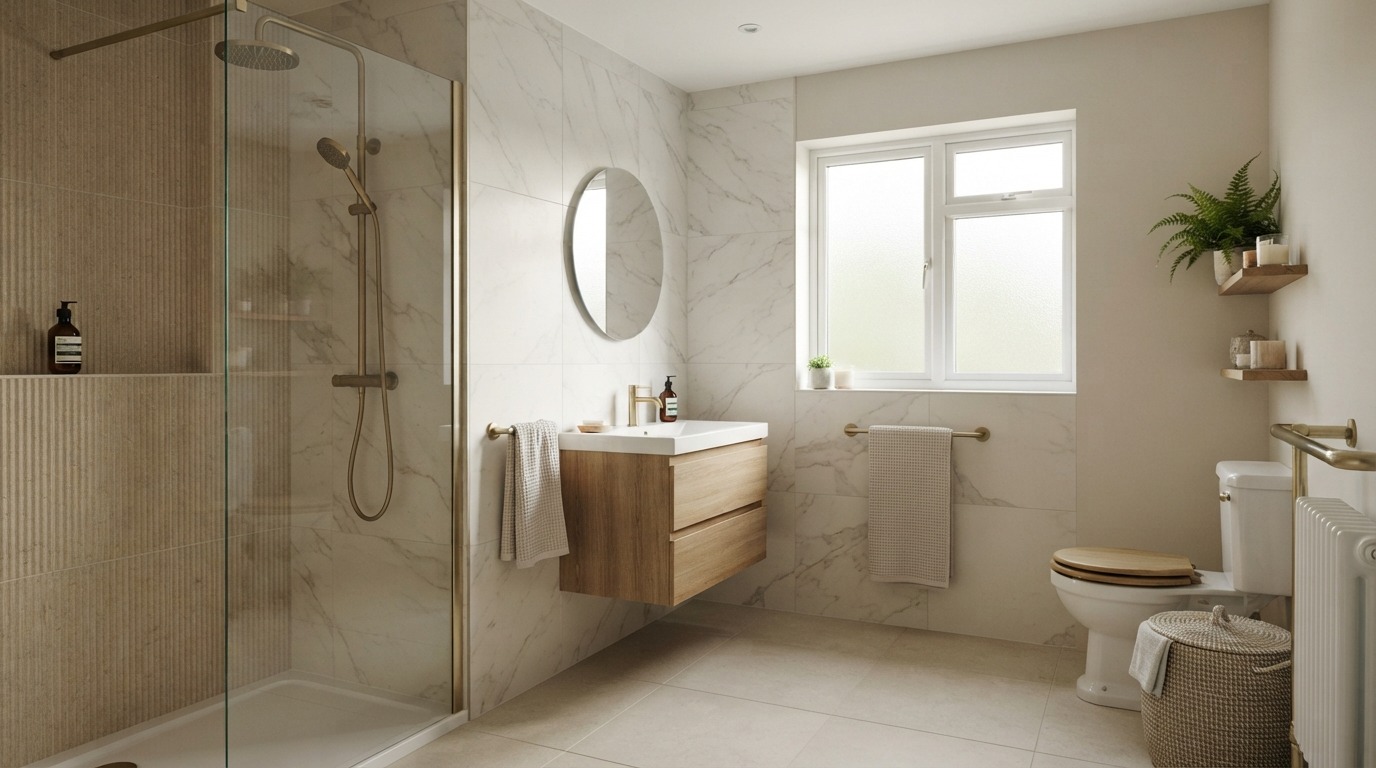
10 Bathroom Wall Tile Ideas to Make Your Bathroom Look Better
Bathroom walls have a bigger impact on the finished room than many people realize. They are one of the first things you notice when you walk in, and the right tile can make a small bathroom feel brighter, a plain room feel more interesting, or a large space feel more considered.
But choosing bathroom wall tiles is not only about finding a color you like. The finish, size, pattern and material all affect how the bathroom looks and how easy it is to live with.
If you're planning a bathroom renovation, here are 10 bathroom wall tile ideas worth considering, along with a few practical things to think about before you order.
1. Marble Effect Wall Tiles for a Timeless Bathroom
Marble has long been associated with elegant bathrooms, but natural marble isn't always the easiest material for an everyday bathroom. It can require more care and maintenance, particularly in areas exposed to regular moisture.
Marble effect tiles offer a way to get that veined, luxurious appearance while keeping the practicality of a manufactured tile.
They work particularly well behind a vanity, around a bath or across a full shower wall. A white marble effect tile can also help a bathroom feel lighter, while stronger veining gives the wall more character.
A useful tip: If you're covering a fairly large wall, look at the pattern across several tiles rather than judging a single tile on its own. The overall arrangement is what creates the finished marble effect.
Royale Stones has a selection of marble effect bathroom tiles in different formats and finishes.
2. Large Format Tiles for a Cleaner Look
Large format bathroom wall tiles have become increasingly popular, and there is a good reason for it.
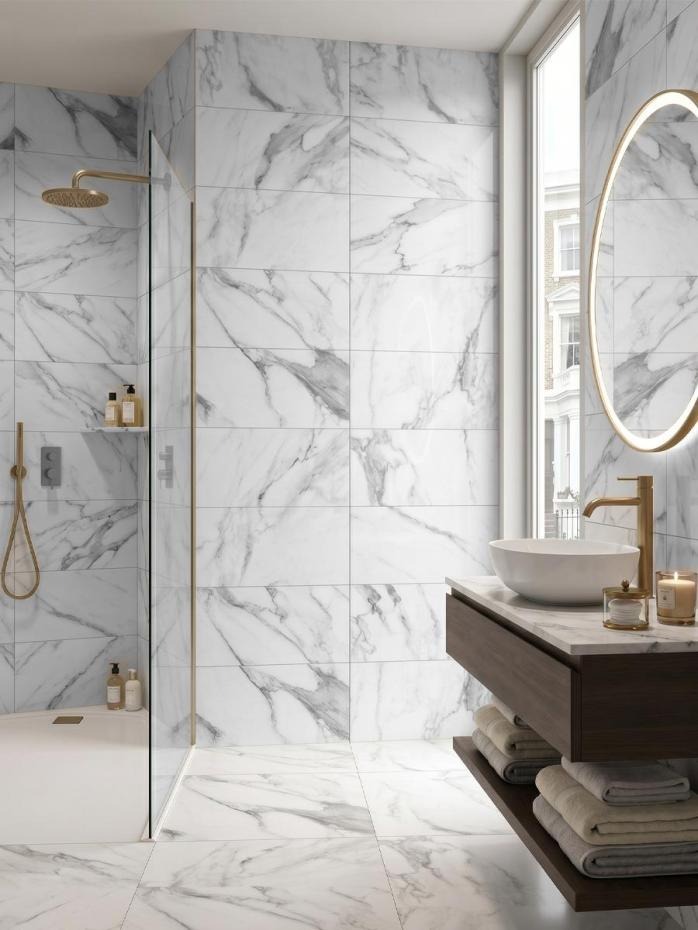
The larger the tile, the fewer grout joints you generally have across the wall. In a bathroom, that can create a cleaner and less interrupted appearance.
This can be especially useful in a smaller bathroom. A wall covered with fewer visible grout lines can feel more open rather than visually broken up into lots of small sections.
Large tiles aren't only for large bathrooms either. A 600 × 1200mm or similar format can work particularly well on a feature wall, provided the wall is properly prepared and the installer is comfortable working with the tile size.
Before choosing: Don't select a large format tile simply because the bathroom is small. Check the wall dimensions, access and installation requirements first.
3. Soft Neutral Tiles for a Calm Bathroom
Beige, cream, ivory and soft stone shades are a good choice if you want your bathroom to feel warm and relaxing rather than stark.
Neutral bathroom wall tiles also give you more freedom with the rest of the room. You can change towels, accessories or even the color of the vanity without having to redesign the entire space around a strong wall color.
This is one reason neutral stone-effect tiles remain such a practical choice. They bring some natural variation to the wall without becoming the main focus of the room.
For a bathroom that you want to feel more like a quiet retreat, combine warm neutral tiles with timber-effect furniture, brushed brass fittings and softer lighting.
4. Gloss Wall Tiles to Make the Most of Light
If your bathroom doesn't get much natural light, a gloss wall tile is worth considering.
The reflective surface catches light and can make the room feel brighter, particularly when used with lighter colors. This is useful in compact bathrooms, downstairs cloakrooms and bathrooms with small windows.
White gloss tiles are the obvious option, but you don't have to stick to plain white. Soft greens, blues and neutral shades can add color while still keeping the room feeling relatively bright.
There is one practical trade-off, though: gloss surfaces can make water marks and splashes more noticeable.
If your bathroom is used heavily, think about where the tile will be installed and how much cleaning you're happy to do. A beautiful finish is only a good choice if it suits the way you actually use the room.
5. Fluted Tiles for a Textured Feature Wall
If a completely flat wall feels a little too plain, fluted tiles can introduce texture without relying on a busy pattern.
They work particularly well behind a vanity or basin where you want to create a focal point without covering every wall in a decorative design.
The vertical lines can also help draw the eye upwards, which can make the wall feel taller.
Fluted tiles are available in ceramic and porcelain options, with different colors and textures. Royale Stones currently offers fluted bathroom and feature wall options, including white ceramic and stone-effect porcelain designs.
One thing to remember: textured surfaces have more places for dust, soap residue and moisture to sit, so consider how easy the particular profile will be to clean before using it throughout the bathroom.
6. Metro Tiles for a Classic Look
Metro tiles are one of those styles that don't really need to follow a trend. Their simple rectangular shape has been used in kitchens and bathrooms for years and can still look fresh when installed well.
The great thing about metro tiles is how much the final appearance can change depending on the layout and grout.
A traditional brick-style arrangement gives a familiar look, while a vertical layout can make the walls feel taller. A contrasting grout can make each tile stand out, whereas a grout color close to the tile creates a quieter finish.
So, even if you choose a fairly simple tile, the installation pattern gives you plenty of room to personalize the room.
7. Stone Effect Tiles for a Natural Feel
Natural stone can bring warmth and character to a bathroom, but it isn't always the most straightforward option for every homeowner.
Stone-effect porcelain tiles can recreate the variation and texture associated with materials such as limestone and travertine while offering the practical characteristics expected from a manufactured tile.
They're particularly useful if you want a bathroom that feels natural rather than overly polished.
Pair a warm stone-effect wall tile with natural-colored flooring and a simple vanity for a relaxed look. Alternatively, combine it with modern black or brass fittings if you want to give the room a more contemporary edge.
Royale Stones' bathroom collection includes limestone, travertine and stone-effect options.
8. Patterned Tiles for a Bathroom with More Personality
Not every bathroom needs to be neutral.
Patterned wall tiles can be a good way of introducing color and personality, particularly in a cloakroom or on one feature wall.
The trick is knowing when to stop.
If the wall tile has a strong pattern, you may not need equally dramatic flooring, furniture and accessories. Let the tile do the work and keep some of the other elements simpler.
This approach is often more successful than trying to make every part of the bathroom a feature.
Patterned and decorative tiles are among the styles available in the Royale Stones bathroom collection.
9. Onyx Effect Tiles for a More Luxurious Finish
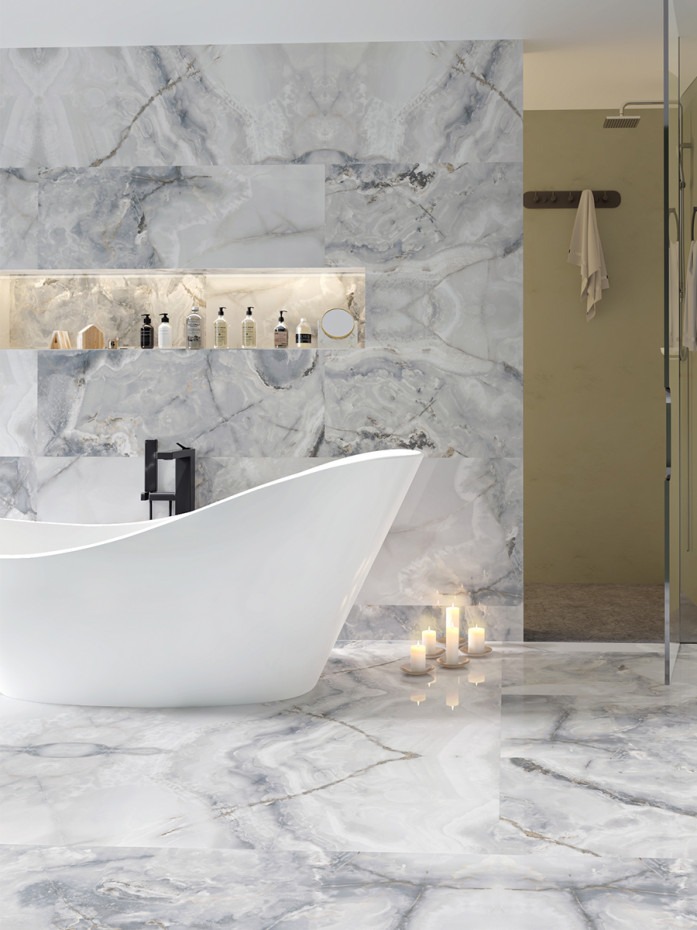
If you want something more dramatic than standard marble, onyx-effect tiles can create a striking bathroom wall.
Their layered color and veining can give the impression of depth, making them particularly effective as a feature behind a freestanding bath or vanity.
You don't necessarily need to cover the whole bathroom with them. Using a more decorative tile on one wall and a simpler complementary tile elsewhere can give you the luxury look without making the room feel too busy.
This is also where ordering a sample becomes particularly useful. Onyx and other heavily patterned tiles can look very different depending on lighting, wall color and the surrounding fittings.
10. White Wall Tiles for a Small Bathroom
Sometimes the simplest option is still one of the most effective.
White bathroom wall tiles can help reflect available light and give a small room a clean, open appearance. They also make it easier to introduce colour through furniture, towels, plants and accessories.
But white doesn't have to mean boring.
You can change the look considerably by choosing:
- Gloss rather than matt
- A textured surface
- A brick or metro shape
- A larger format
- A subtle marble or stone effect
- A different grout colour
For a compact bathroom, larger light-coloured tiles can be particularly useful because reducing the number of grout lines can give the walls a more continuous appearance. Royale Stones' bathroom range includes white and off-white options in several sizes and finishes.
How Do You Choose the Right Bathroom Wall Tile?
Looking at tile ideas is the enjoyable part. Choosing the right one for your bathroom needs a little more thought.
Start with the size of the room and the amount of natural light.
A darker bathroom doesn't necessarily mean you can't use dark tiles, but you may want to balance them with lighter flooring, good lighting or a lighter-coloured ceiling.
Then consider how the bathroom is actually used.
A family bathroom may need a different approach from a guest cloakroom. In a busy bathroom, easy cleaning and a practical surface may matter more than choosing the most delicate decorative finish.
Think about the tile material
Porcelain and ceramic are both commonly used for bathroom walls, but they aren't identical.
Porcelain is denser and has very low water absorption, which makes it a popular option where durability and moisture resistance are priorities. Ceramic tiles are generally lighter and can be a practical choice for wall applications.
The right choice depends on the particular tile, its intended use and the installation system rather than simply choosing one material for every situation. Royale Stones' bathroom range includes both porcelain and ceramic options.
Don't forget the grout
Grout is easy to overlook when you're choosing tiles, but it can change the finished appearance considerably.
A matching grout creates a more seamless appearance. A contrasting grout highlights the individual tile shape and layout.
It also has a practical side. Bathrooms experience regular moisture, so proper preparation, suitable adhesive and grout, and good installation are just as important as the tile itself.
Should You Order Bathroom Tile Samples?
If you're unsure between two colours or finishes, yes, a sample is worth considering.
A tile that looks warm and beige on a computer screen may look quite different beside your actual flooring, vanity and bathroom lighting.
Put the sample in the room at different times of the day. Look at it beside your taps, worktop and flooring rather than judging it in isolation.
It's a small step that can prevent an expensive mistake when you're ordering enough tile for an entire bathroom.
Final Thoughts
The best bathroom wall tile isn't necessarily the most expensive or the most fashionable one. It is the tile that works with your room, your style and the way you use the bathroom every day.
A gloss tile may be ideal when you're trying to bring more light into a dark room. Large format tiles can give a cleaner appearance with fewer grout lines. Stone and marble effects can add character without requiring the same approach as natural stone, while patterned or fluted tiles can turn one wall into a genuine feature.
If you're still deciding, it's worth looking at different colours, sizes and finishes before committing. Explore the Royale Stones bathroom tile collection to compare options for walls, floors and different bathroom styles.
FAQs
What is the best tile for bathroom walls?
Ceramic and porcelain are both popular choices for bathroom walls. The best option depends on the tile's intended application, finish, size and the look you want to achieve.
Are large tiles good for small bathrooms?
Yes. Large wall tiles can make a small bathroom feel more open because there are fewer grout lines breaking up the surface. However, the wall should be suitable for the tile size and properly prepared before installation.
Are gloss tiles better for small bathrooms?
Gloss tiles can be useful in small bathrooms because their reflective surface can help bounce light around the room. However, water marks can be more visible, so consider maintenance as well as appearance.
What is better for bathroom walls, porcelain or ceramic?
Both can work well. Porcelain is denser and has very low water absorption, while ceramic is generally lighter and is often used for wall applications. Always check the manufacturer's suitability information for the specific tile.
Should bathroom wall tiles match the floor?
They don't have to match exactly. Using complementary colours or finishes can create a more interesting bathroom. For example, a simple neutral floor can balance a decorative feature wall.
How can I make a small bathroom look bigger with tiles?
Light colours, reflective finishes and larger-format wall tiles can all help create a more spacious feel. Keeping the overall colour palette simple can also reduce visual clutter.
Do I need to order tile samples?
If you're unsure about colour, texture or finish, ordering samples is a good idea. Bathroom lighting and surrounding colours can make a tile look different from how it appears on a screen.
0 Comments Add a Comment?